Read together, Naval's recommendations reveal a reader trying to assemble
a single coherent operating system for thinking, not a collection of tips.
The backbone is epistemology. David Deutsch's The Beginning of Infinity
supplies the load-bearing idea — that knowledge is created through
conjecture and criticism, that good explanations are hard to vary, and that
problems are soluble. Almost everything else he recommends is a specialised
application of that stance.
From there the list branches along predictable lines. The scientific
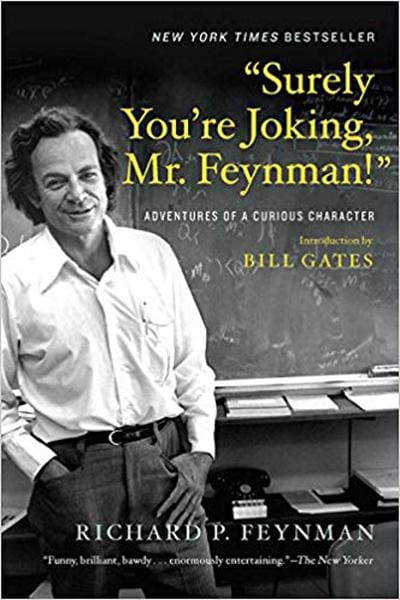
thread — Feynman and the popular-physics titles — is really about
calibration: seeing clearly, distrusting your own intuitions, and preferring
mechanism over narrative. The Taleb thread (Skin in the Game,
Antifragile, Fooled by Randomness) converts that
calibration into action, replacing prediction with robustness and asymmetric
bets. The historical thread — Durant's The Lessons of History —
supplies the long base rate against which any present moment can be judged.
And Cialdini's Influence maps the levers that move people once you
understand how they actually decide.
Balancing all of this is a contemplative counter-current — the Stoics,
the Tao Te Ching, and modern non-dual writers like Anthony de Mello and
Michael Singer. This is the tell that distinguishes Naval from a purely
analytical reader: he pairs rigorous outer-world epistemology with an
inner-world practice aimed at desire, attention and peace. The lineage is
coherent — Enlightenment rationalism (Deutsch, Smith, the physicists) fused
with Stoic and Eastern philosophy — and it explains why one recommendation
so often leads to the next. Read Deutsch and you want Feynman; internalise
uncertainty and you reach for Taleb; exhaust yourself optimising and you
return to Marcus Aurelius. The reading list is less a syllabus than a
portrait of someone building tools to think clearly and live calmly at the
same time.