




Book
Justice as Fairness
240 pages · 2001 · Rating 3.8
We earn a small commission if you buy. It never changes a grade.
Key takeaways
Understanding the Principles of Justice
In 'Justice as Fairness', John Rawls explores the two principles of justice. The first one is about everyone having the same basic rights, and the second one is about social and economic inequalities. Rawls believes that these inequalities should be arranged to benefit the least advantaged and should be attached to positions open to all. It's a great book to dig into if you're interested in social justice.
The Original Position and Veil of Ignorance
Rawls introduces the concept of the 'original position' and the 'veil of ignorance'. He suggests that if people didn't know their social status, they would create a fair society. It's a fascinating thought experiment that encourages us to look at society from a different perspective.
The Importance of Fair Equality of Opportunity
Rawls emphasizes the importance of fair equality of opportunity. He argues that everyone should have an equal chance to qualify for the more privileged positions in society's institutions. This book will make you see the importance of creating equal opportunities for everyone.
The Difference Principle
One of the key takeaways from 'Justice as Fairness' is the difference principle. Rawls argues that social and economic inequalities should be arranged so they are to the greatest benefit of the least advantaged. It's a unique perspective that will make you rethink how society should be structured.
The Role of Justice in Society
Rawls sees justice as the fundamental virtue of social institutions. He believes that a just society is one where the distribution of wealth and income, and the design of organizations, are fair. If you're interested in exploring the role of justice in society, this book is a must-read.
Who recommends Justice as Fairness
1About this book
- Author
 John Rawls
- Pages
- 240
- Edition
- 2001
- Summary
- This book was originally a set of lectures for a political philosophy class by the man who also wrote A Theory of Justice and Political Liberalism.
In time, these lectures became a restatement of his Theory of Justice As Fairness theory, revised in light of his more recent papers and treatise about political liberalism.
The restatement presents in one place an account of justice as fairness as Rawls now sees it, drawing on all his previous works. This book offers a broad overview of his main lines of thought and also explores specific issues never before addressed in any of his writings.
Quotes
What people have said about Justice as Fairness.
Rawls' Justice as Fairness is a profound exploration of the concept of justice, offering a compelling vision of a society grounded in fairness and equality.
 Martha NussbaumPhilosopher, Feminist
Rawls' work is a monumental contribution to the philosophical understanding of justice. It is a must-read for anyone interested in the subject.
 Amartya SenEconomist, Philosopher
Rawls' Justice as Fairness is a groundbreaking work that has reshaped our understanding of justice in the modern world.
 Thomas PoggePolitical Philosopher
Rawls' Justice as Fairness is a seminal work that has profoundly influenced our understanding of justice and fairness in society.
 Michael SandelPolitical Philosopher
Rawls' Justice as Fairness is a monumental work that has reshaped our understanding of justice in the modern world.
 Charles TaylorPhilosopher, Sociologist
If you liked Justice as Fairness
The Innovator's Dilemma
23 readers · Rating 4.5
Antifragile
21 readers · Rating 4.5
1984
18 readers · Rating 4.7
Range
17 readers · Rating 4.6
The Black Swan
17 readers · Rating 4.5
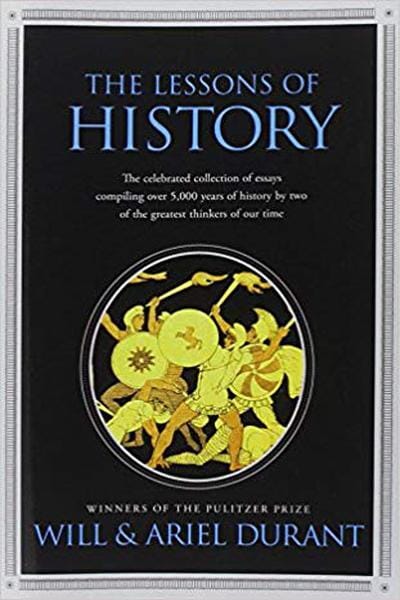
The Lessons of History
15 readers · Rating 4.6
Fooled by Randomness
12 readers · Rating 4.5
Predictably Irrational
12 readers · Rating 4.6




More books from these readers
Other books recommended by readers who recommend this one.