




Book
The World as Will and Representation
694 pages · 1966 · Rating 4.3
We earn a small commission if you buy. It never changes a grade.
Key takeaways
Understanding the Will
In The World as Will and Representation, Arthur Schopenhauer introduces the concept of 'Will'. He suggests that this 'Will' is the driving force behind everything in the universe. It's not about what you want or desire, but rather the primal force that drives all action and existence. It's a fascinating concept to explore and can change the way you see the world.
The Role of Representation
Schopenhauer also talks about 'Representation'. He believes that our perception of the world is just a representation of the 'Will'. We don't see the world as it is, but as we are. This idea can make you rethink how you perceive and interact with the world around you.
The Power of Art
One of the most interesting parts of the book is when Schopenhauer discusses the role of art. He sees art as a way to escape the 'Will' and its demands. When you're engaged in art, you're not driven by desires or needs, but by pure creativity. This can be a powerful way to find peace and fulfillment.
The Nature of Suffering
Schopenhauer isn't shy about discussing suffering. He believes that suffering is a natural part of life, caused by the endless striving of the 'Will'. But don't let this discourage you. Understanding this concept can help you find ways to manage and reduce suffering in your own life.
The Path to Enlightenment
Finally, Schopenhauer suggests a path to enlightenment. He believes that by denying the 'Will', we can achieve a state of tranquility and peace. This doesn't mean giving up on life, but rather learning to let go of desires and needs that cause suffering. It's a challenging concept, but one that can lead to profound personal growth.
Who recommends The World as Will and Representation
1About this book
- Author
 Arthur Schopenhauer
- Pages
- 694
- Edition
- 1966
- Summary
- Arthur Schopenhauer's Die Welt als Wille und Vorstellung is one of the most important philosophical works of the nineteenth century, the basic statement of one important stream of post-Kantian thought.
It is unquestionably Schopenhauer's greatest work. Conceived and published before the philosopher was 30 and expanded 25 years later, it is a culmination of his life's work and achievements.
In 1958, a new translation by E. F. J. Payne appeared that decisively supplanted the older one. Payne's translation is superior because it corrects nearly 1,000 errors and omissions in the Haldane-Kemp translation, and it is based on the definitive 1937 German edition of Schopenhauer's work prepared by Dr. Arthur Hübscher, who was close to Schopenhauer in his final years. Payne's edition is the first to translate into English those texts' many quotations in half a dozen languages; it thus provides a better understanding of Schopenhauer's intentions through comparison with his sources.
Quotes
What people have said about The World as Will and Representation.
Schopenhauer's work, 'The World as Will and Representation', is a profound exploration of the human condition that has deeply influenced my own philosophical journey.
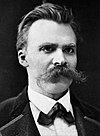 Friedrich NietzscheInfluential Philosopher
Schopenhauer's 'The World as Will and Representation' offers a unique perspective on the universe that has greatly impacted my understanding of physics.
 Albert EinsteinTheoretical Physicist
Schopenhauer's 'The World as Will and Representation' has been a significant influence on my development of psychoanalysis.
 Sigmund FreudFather of Psychoanalysis
Schopenhauer's 'The World as Will and Representation' has deeply influenced my musical compositions.
 Richard WagnerGerman Composer
If you liked The World as Will and Representation
The Hero with a Thousand Faces
8 readers · Rating 4.7
The Book of Five Rings
8 readers · Rating 4.5
The Republic
6 readers · Rating 4.5
Self Reliance
4 readers · Rating 4.5
Essays and Aphorisms
3 readers · Rating 4.6
Reasons and Persons
2 readers · Rating 4.5
Letters of Note
2 readers · Rating 4.7
Feminist Theory
2 readers · Rating 4.8


In reading lists
More books from these readers
Other books recommended by readers who recommend this one.